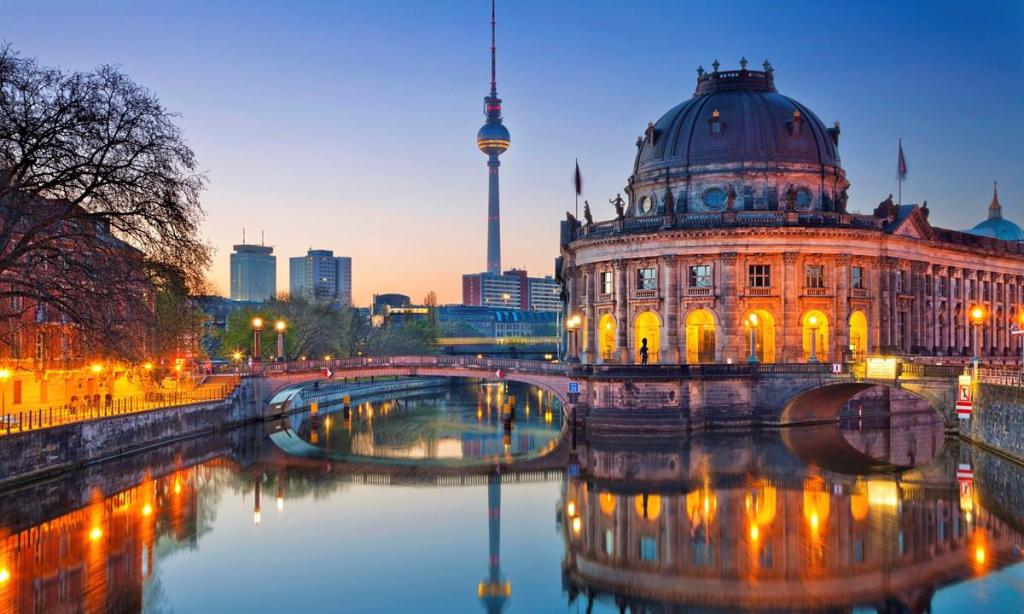
Berlin has busied itself since the fall of its infamous Wall with becoming one of the most stimulating creative and cultural centres in Europe. It is a hub for hedonists, hipsters and history buffs alike – one that truly offers something for everyone. Its slew of art spaces, notoriously tolerant nightlife and burgeoning start-up scene grab the headlines most regularly, but the city is also a welcoming destination for families thanks to a wealth of green spaces, sparkling lakes and a generally child-friendly infrastructure. Luxury travellers are catered for with a slew of five-star hotels, Michelin-starred dining spots and indulgent spas; and for history fans, there’s plenty – after all, the city was at the heart of much of the turbulent 20th century.Alongside world-famous cultural and historical sights – such as the Unesco-protected Museum Island and the domed Reichstag, Alexanderplatz and Checkpoint Charlie – the inner-city neighbourhoods (Prenzlauer Berg, Friedrichshain, Kreuzberg, Neukölln and Schöneberg) are huge on local atmosphere and peppered with hip bars and restaurants, as well as independent boutiques and quirky museums.
https://www.lonelyplanet.com/video/introducing-berlin/v/vid/442
If you are an experienced traveler, you probably know by now that traveling to a large city should never happen without proper planning. Berlin is a city which has a lot to offer to its visitors and there are quite a few things you should know about this city which will help you experience it better.
If it’s your first time traveling to Berlin, there are a few tips and tricks which can truly help you move around the city with more ease and help you feel a little less lost. Here are some crucial things you need to know in order to make your trip a lot more enjoyable.
1. Visiting during the summer
As you might have imagined, the weather in Germany can be quite gloomy during the colder months. This is a huge reason why most visitors suggest that you visit Berlin during the spring or summer. Not only will you be able to visit everything without having to worry about the rain or snow, but you will also be able to carry less heavy luggage with you.
2. Use public transportation
From the moment you arrive in Berlin, you will notice that public transportation is not only affordable but also always on time. Everything in this city arrives on time and you will be able to reach every place you wish by taking the right bus or train.
There are many different tickets to choose from depending on where you wish to go. The train ticket from the airport costs €3 and will help you reach the central train station in just under 30 minutes. Apart from that, you can purchase tickets for the Airport Express Buses which come every 10 minutes and cost €2.80.
3. Validate your tickets on time
After you purchase your public transportation tickets you will have to make sure that you validate them before you enter the means of transport. There is no way to validate your ticket inside the vehicles, apart from the buses, and you don’t want to risk getting a fine over a silly mistake.
If you decide to purchase day pass ticket, it will cost you 7€ and the good thing about it is that you will only have to validate it the first time you use it. If you’re having any trouble understanding where to go because of the language barrier,The Word Point offers you translation help no matter where you are.
4. Book your Reichstag building ticket in advance
One of the things that most people want to visit when they arrive in Berlin is the Reichstag building. The glass dome is really spectacular and really worth seeing in person. In order to avoid losing time and not managing to visit it, you should book a ticket in advance. Admission is free but it’s best to reserve your spot in time, rather than waste time trying to find an open spot.
5. Berlin is vegan and vegetarian-friendly
While Germany is well-known for its sausages, you should also know that Berlin was voted the most vegan-friendly country of 2017 by Happy Cow. With over 470 restaurants with vegan options available, you can imagine why it can be a true heaven for vegans. On top of that, Berlin also is home to the largest vegan grocery chain called Veganz.
6. Cyclists are everywhere
In case you didn’t know, Berlin is one of those cities which are really friendly for cyclists. The roads are divided into two sections so that both pedestrians and cyclists can move freely in their lanes. If you’re visiting Berlin for the first time, you might just want to stay off the bike lane as it will not only be impolite but also confusing for the rest of the pedestrians and bikers.
7. How tipping works
Tipping in Berlin is probably as important as in any other part of the world. While it’s not always necessary, it is certainly polite and you will have to tip people correctly in order to be respectful. What is usually expected is to tip a person about 10-15% of what your total is.
You will have to tell the person what you are tipping them and then pay them the total amount along with their tip. You should also not forget to tip your taxi driver as well as the porter and housekeepers in your hotel.
8. Get a museum pass
A great way to visit many of the museums in Berlin is to get a 3-day museum pass. In case you didn’t know, Berlin has over 170 museums, and while it’s not realistic to expect to visit each and every one of them, you should still make some time to visit the most important ones.
The 3-day museum pass will cost you €29 and will provide you with free admission to over 30 museums for the course of 3 days. If you decide to do this, you should plan in advance in order to have enough time to dedicate to visiting most museums on this list.
9. Don’t focus solely on the local cuisine
While you might be waiting to try local sausages and currywurst, you should also keep in mind that Berlin has a large Turkish population that has filled the city with countless doner kebab stands. Along with that, there are many popular Thai and Vietnamese restaurants where you can enjoy traditional recipes from the other side of the world.
10. Don’t talk about World War II
Imagineliving in Germany where you always have to always explain the actions of your ancestors. World War II was a dark period for the entirety of Europe and the German citizens have truly grown tired of having to explain the reasons and circumstances around it. It would be best if you don’t burden anyone with this topic or if it comes up,approach it carelessly.
Follow My Blog
Get new content delivered directly to your inbox.
 Traveling around the world